Last Updated: November 24, 2025
Types of Respite Care
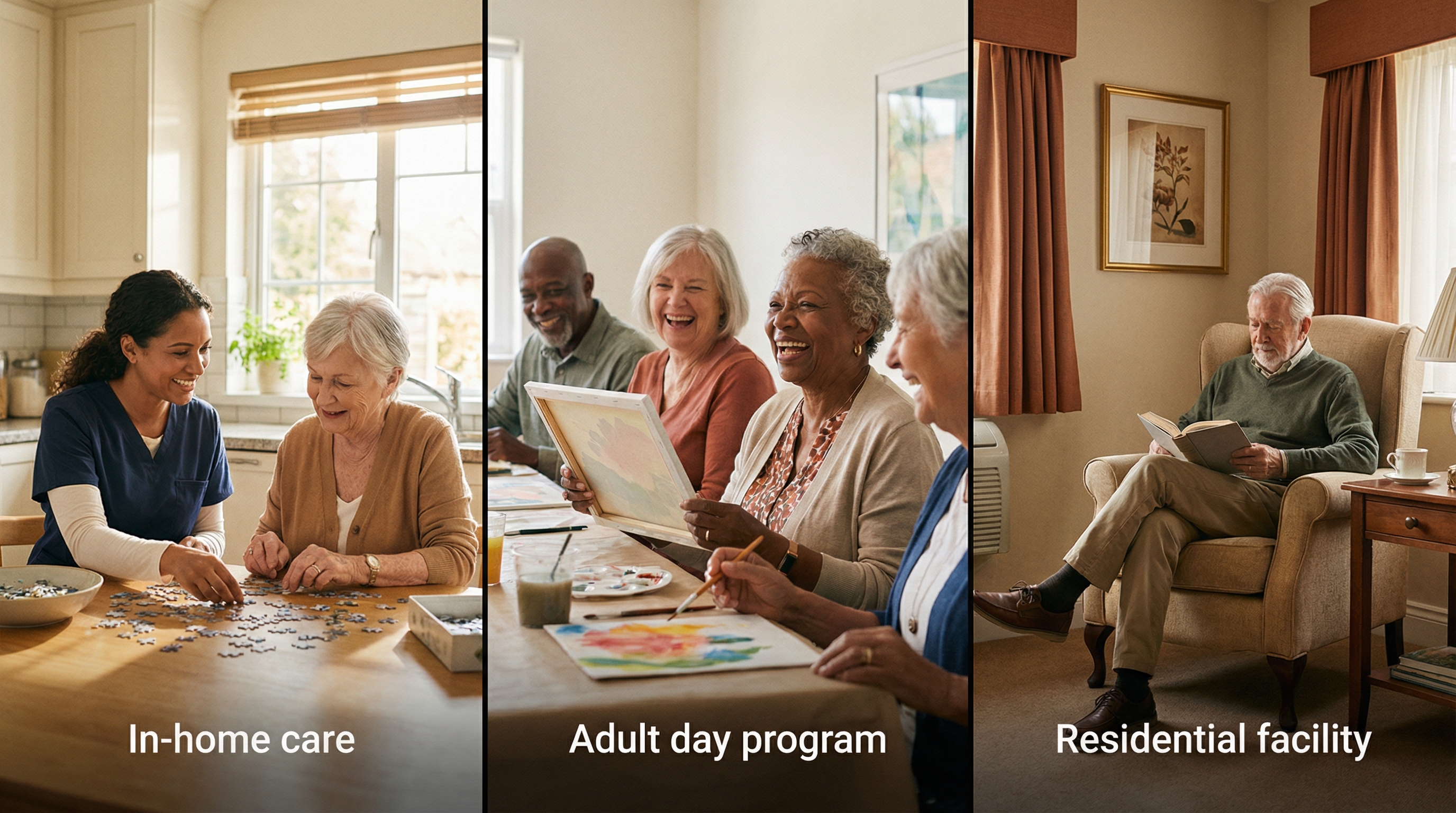
Respite care comes in several forms, each designed to meet different needs and situations. In-home respite brings professional caregivers to your home, adult day programs provide supervised care in group settings, residential respite offers short-term facility stays, and emergency respite addresses urgent situations. Understanding the differences helps you choose the right type of respite care for your family.
In-home respite care
In-home respite care brings a professional caregiver to your loved one's home, allowing them to remain in familiar surroundings while you take a break.
How In-Home Respite Works
- Duration: Typically 2-12 hours, but can extend to overnight or 24-hour care
- Scheduling: Flexible - can be regular weekly visits or occasional as-needed care
- Caregiver qualifications: Certified nursing assistants (CNAs), home health aides, or companions
- Activities: Personal care, meal preparation, medication reminders, companionship, light housekeeping
Benefits of In-Home Respite
- Care recipient stays in familiar, comfortable environment
- One-on-one attention from caregiver
- No transportation needed
- Flexible scheduling - as little or as much as you need
- Can accommodate special equipment or home modifications
- Pets can remain part of daily routine
- Family photos and belongings provide comfort
Drawbacks of In-Home Respite
- Higher cost per hour than group settings
- No social interaction with peers
- Limited activities compared to day programs
- May require backup caregiver if scheduled caregiver is unavailable
- Your loved one may resist having a stranger in their home
Best For
- Short breaks (a few hours to a day)
- Care recipients who are uncomfortable leaving home
- Those with significant mobility challenges
- People with complex medical needs requiring specialized care
- Caregivers who need flexibility in scheduling
- Overnight or extended in-home coverage
Average Cost
- Basic care: $15-25 per hour
- Specialized care (dementia, medical needs): $25-40 per hour
- Overnight care: $150-300 per night
Adult day programs
Adult day programs (also called adult day care or adult day health care) provide supervised care, meals, and activities in a group setting during daytime hours.
How Adult Day Programs Work
- Hours: Typically 8am-5pm or 9am-4pm, Monday through Friday
- Transportation: Many programs provide door-to-door transportation
- Staff: Nurses, social workers, activity coordinators, and trained aides
- Setting: Community centers, churches, senior centers, or dedicated facilities
- Schedule: Attend 1-5 days per week based on your needs
Types of Adult Day Programs
- Social Adult Day Care: Focus on activities, meals, and socialization for relatively independent seniors
- Adult Day Health Care: Includes medical services, therapy, and nursing care for those with health conditions
- Specialized Programs: Dedicated care for specific conditions like Alzheimer's, Parkinson's, or stroke recovery
Activities and Services Offered
- Nutritious meals and snacks
- Arts and crafts
- Music and entertainment
- Exercise and movement programs
- Games and cognitive activities
- Social interaction with peers
- Personal care assistance (bathing, toileting, grooming)
- Medication administration and monitoring
- Health monitoring (blood pressure, glucose checks)
- Therapy services (physical, occupational, speech)
Benefits of Adult Day Programs
- More affordable than in-home care (typically $50-100 per day)
- Social interaction reduces isolation and depression
- Structured activities promote mental and physical health
- Professional supervision and health monitoring
- Gives caregivers consistent, predictable break time
- Transportation often included
- Hot meals provided
Drawbacks of Adult Day Programs
- Fixed hours - no flexibility for evening or weekend care
- Care recipient must be willing and able to attend
- Transportation time adds to total time away from home
- Group setting may not suit everyone's personality
- Potential exposure to illnesses in group environment
- May have waiting lists in some areas
Best For
- Caregivers who work during the day
- Care recipients who enjoy social interaction
- Those who benefit from structured activities
- Families seeking affordable regular respite
- People who are mobile or can transfer with assistance
- Those who need daytime monitoring but not 24-hour care
Average Cost
- Social programs: $50-80 per day
- Health-focused programs: $70-120 per day
- Specialized dementia programs: $80-150 per day
Residential respite care
Residential respite provides short-term stays at assisted living facilities, nursing homes, or specialized care facilities, typically for several days to a few weeks.
How Residential Respite Works
- Duration: Typically 3-30 days, though some facilities offer shorter or longer stays
- Setting: Private or semi-private room in a care facility
- Services: 24-hour supervision, meals, personal care, activities, medication management
- Staff: Licensed nurses, CNAs, activity coordinators, social workers
Types of Residential Respite Facilities
- Assisted Living Facilities: For those who need help with daily activities but not intensive medical care
- Nursing Homes: For those requiring skilled nursing care and medical monitoring
- Memory Care Units: Specialized secure units for dementia and Alzheimer's care
- Hospice Facilities: For those in end-of-life care (may be covered by Medicare)
Benefits of Residential Respite
- 24-hour professional care and supervision
- Caregiver can take extended break or vacation
- All meals, activities, and care included
- Opportunity to "trial" a facility for potential future placement
- Social activities and interaction with other residents
- Emergency medical support readily available
- Complete break from caregiving responsibilities
Drawbacks of Residential Respite
- Higher cost than other respite types
- Care recipient leaves familiar home environment
- Adjustment period to new setting may cause stress
- Not all facilities offer respite care
- May require advance booking
- Quality varies widely between facilities
- Minimum stay requirements at some facilities
Best For
- Caregivers needing extended breaks (vacation, surgery, family events)
- Caregivers experiencing burnout who need intensive rest
- Care recipients who require 24-hour supervision
- Emergency situations requiring immediate overnight care
- Families considering long-term facility placement (trial stays)
- When in-home care is not feasible for extended periods
Average Cost
- Assisted living respite: $150-300 per day
- Nursing home respite: $200-350 per day
- Memory care respite: $250-400 per day
- Weekly rates: Often discounted (5-10% off daily rate)
Emergency respite care
Emergency respite provides immediate care when unexpected situations arise, such as caregiver illness, family emergencies, or sudden caregiver absence.
How Emergency Respite Works
- Availability: Short notice (often 24-48 hours or less)
- Duration: Variable - as short as a few hours or up to several days
- Settings: In-home, facility-based, or hospital social work arranged
- Access: Through Area Agencies on Aging, care agencies, or emergency social services
When You Might Need Emergency Respite
- You experience sudden illness or injury
- Family emergency requires immediate travel
- Your scheduled caregiver cancels last minute
- Care recipient has behavioral crisis you cannot manage
- You reach crisis point with burnout
- Weather emergency prevents you from getting home
- Unexpected work obligation
Emergency Respite Resources
- Area Agency on Aging: Many have emergency respite funds and rapid-response networks
- 211 Helpline: Connects to local emergency care resources
- Hospital social workers: Can arrange emergency placement if you're hospitalized
- Faith-based organizations: Some offer emergency volunteer care
- Home care agencies: Some have same-day or next-day availability
Cost of Emergency Respite
- Often 25-50% higher than scheduled respite due to short notice
- Some Area Agencies on Aging have emergency funds to cover costs
- May be covered by Medicaid emergency services in some states
- Worth the premium to prevent caregiver or care recipient crisis
Specialized respite care
Dementia and Alzheimer's Respite
- Caregivers trained in dementia care techniques
- Memory care units with secure environments
- Activities designed for cognitive engagement
- Behavioral management expertise
Pediatric Respite Care
- For families caring for children with disabilities or medical needs
- Caregivers with pediatric training
- Age-appropriate activities and care
- Can be in-home or camp/program-based
Veterans Respite Care
- Through VA medical centers and community programs
- Staff familiar with military culture and veteran needs
- May include support groups for military families
Comparing respite care types
| Type | Best Duration | Cost Range | Key Benefit |
|---|---|---|---|
| In-Home | 2-12 hours | $15-40/hour | Familiar environment |
| Adult Day | 4-8 hours | $50-120/day | Socialization + affordability |
| Residential | 3-30 days | $150-350/day | 24-hour care + extended break |
| Emergency | Variable | Premium rates | Immediate availability |
How to choose the right type for your family
Consider These Factors
- Your loved one's preferences: Do they want to stay home or enjoy social settings?
- Medical needs: Level of care required and staff qualifications needed
- Mobility and transportation: Can they travel to a program or need home-based care?
- Your schedule: Need regular predictable breaks or occasional longer breaks?
- Budget: Available funding and out-of-pocket costs
- Trial period: Most programs allow trial visits before committing
Combining Respite Types
Many families find success using multiple types:
- Adult day program 2-3 days per week for regular breaks
- In-home care for evening or weekend respite
- Residential respite quarterly for extended vacations
- Emergency respite as backup plan
Key Takeaways
- Four main types: in-home, adult day programs, residential, and emergency respite
- In-home offers flexibility and familiar environment but costs more per hour
- Adult day programs provide affordable regular respite with socialization
- Residential respite allows extended breaks with 24-hour professional care
- Emergency respite addresses unexpected situations but at premium rates
- Most families benefit from combining multiple respite types
- Choice depends on care needs, preferences, budget, and break duration needed
Related Resources
- How Much Does Respite Care Cost? - Detailed cost breakdown by type
- How to Pay for Respite Care - Funding options for each respite type
- How to Find Respite Care Near You - Locate providers for each type of respite
- Respite Care for Dementia and Alzheimer's - Specialized respite for memory care needs